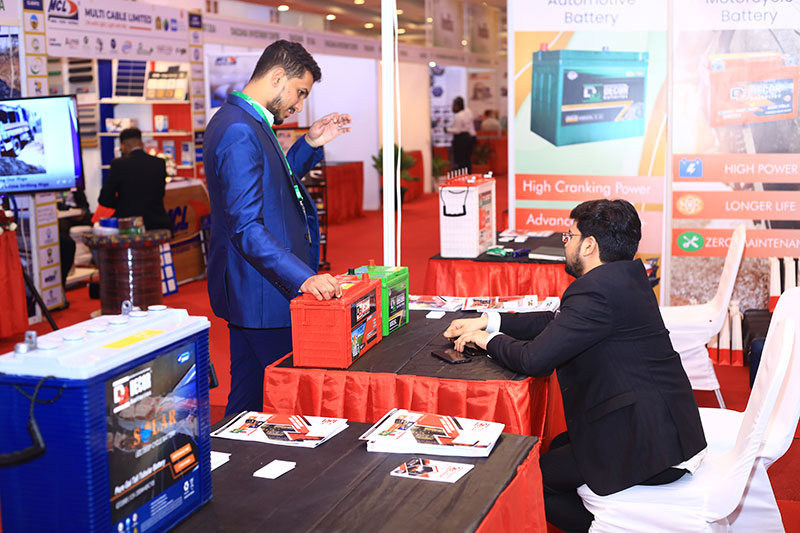
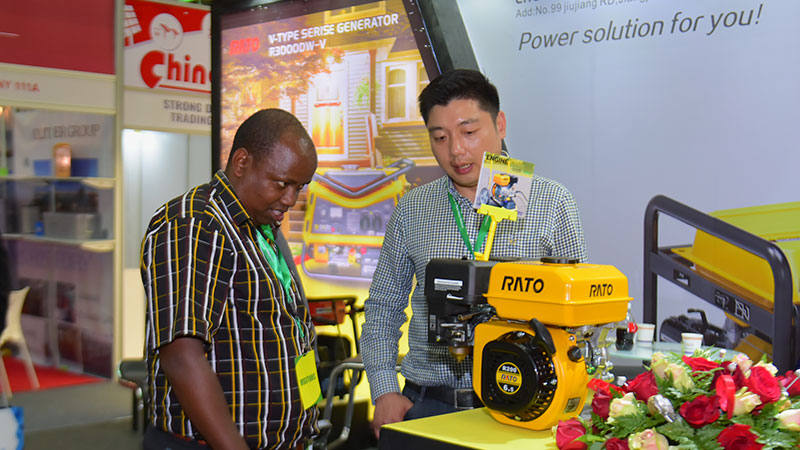
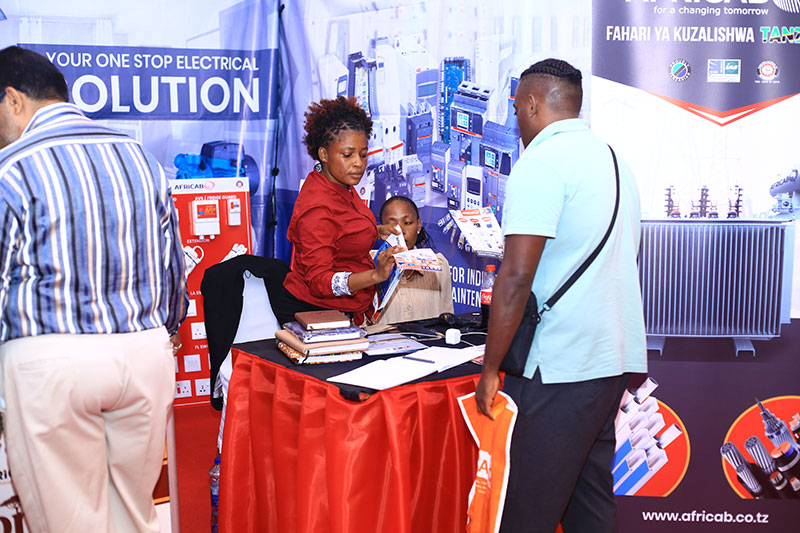
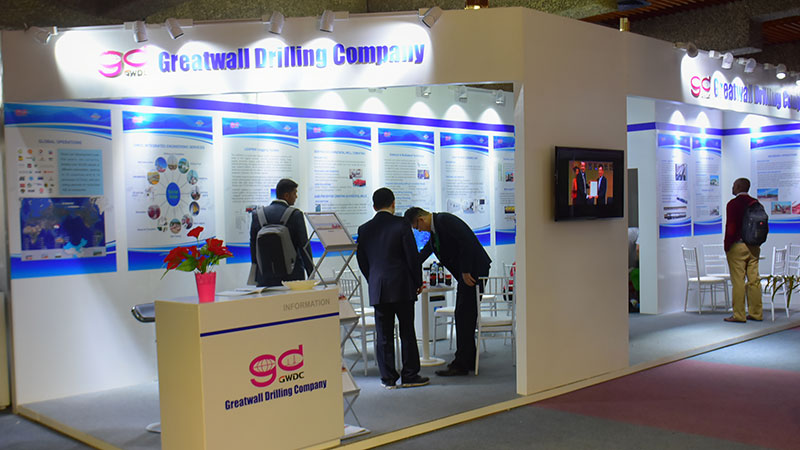
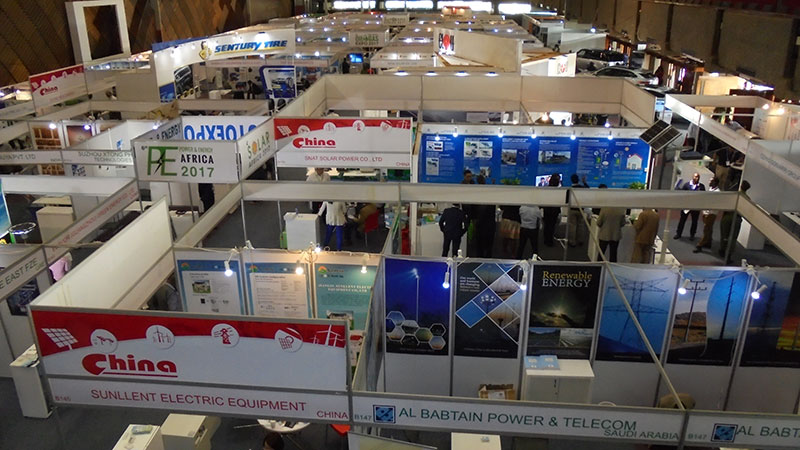
The second edition of Power & Energy Africa is an imposing demonstration of its importance for the successful development of power and energy sector in Kenya. The expectations with the first show were not only fulfilled, but clearly surpassed.
The 2nd Power & Energy Africa is being held from the 29th of April to the 1st of May, 2013 at Kenya's prime international venue; the Kenyatta International Conference Centre in Nairobi.
Exhibiting at the largest power event in the industry will allow you to showcase your products and services to the industry's largest gathering of qualified decision-makers.
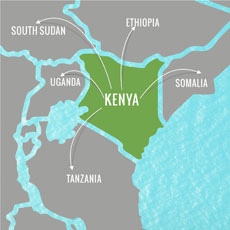
Trade visitors from all over East & Central African countries are being invited directly and in collaboration with several regional trade bodies in Kenya, Tanzania, Ethiopia, Uganda, Somalia, Mozambique & Congo. Though Kenya by itself is one of the biggest markets in Africa, major emphasis is being laid upon attracting traders and importers from neighbouring countries.
![]() |
![]() |

![]() |
![]() |
![]() |
![]() |
Kenya to build Africa's largest wind farm
The construction of what is to become Africa's biggest wind farm will start by June in an arid region of northern Kenya, the project's officials said Saturday.
A total of 365 wind turbines will be erected near Lake Turkana, where winds blow predictably and regularly, averaging speeds of 11 metres per second.
After seven years of study and funding negotiations, the 585 million euro ($775 million) project is to take off in June once risk guarantees from the Ida and Miga financial institutions - part of the World Bank Group - are finalised, Carlo Van Wageningen, head of Lake Turkana Wind Power, told AFP.
"All the contracts are in place. We're ready to start" the work once we get these guarantees, he said.
The first step will be to improve on or build 204 kilometres (126 miles) of road in northern Kenya for the trucks that will make 12,000 trips to bring in all the materials for the project in the remote, neglected region.
"We're in the middle of nowhere. There is no infrastructure whatsoever," Van Wageningen said, adding that the wind farm site resembles "photos of the surface of the moon."
A 428-kilometre transmission line will also be built to link the wind farm to the national grid at an additional cost of 142 million euros.
The transmission line will be built by Isolux Corsan of Spain and financed by loans from the Spanish and Kenyan governments.
The wind farm is expected to start production of the first 50 MW in mid-2014 and reach full capacity in early 2015, by which time it should have an installed capacity of 300 megawatts.
Total energy generation in Kenya was 6,460 MW hours in 2008, half from hydroelectric power, one-third from oil and 16 percent from geothermal power, according to the Global Energy Network Institute.
Morocco currently boasts Africa's largest wind energy production, with a capacity of 140 megawatts from 165 turbines.
The consortium for the Kenyan project has entered into a contract to sell the power produced to utility company Kenya Power over 20 years at a cost of 7.52 euro cents/kwh, a price, which, together with geothermal, is the lowest in Kenya.
"Here you can produce windpower at an interesting cost, without subsidies," unlike the case in Europe, Van The African Development Bank said it was "heading the financing process" to arrange for a loan that will cover 70 per cent of the project cost. Wageningen said.
Foreign investors eye growing Kenya solar panel market
Overseas companies are positioning themselves to grab a slice of the pie in the rapidly expanding market for solar panels in Kenya. German and Chinese manufacturers of solar panels have expressed willingness to enter the Kenyan market as demand for cleaner sources of energy surges. Market watchers say East Africa's largest economy is both a frontier market and strategic gateway for overseas manufacturers of solar panels willing to explore the nascent market renewable energy technologies.
Macro-economic stability combined with policy and regulatory incentives from the government has created a conducive environment for foreign investors to penetrate an expanding market niche for solar panels. According to policy briefs from the Ministry of Energy, Kenya has accelerated the shift to renewable sources of energy to become a green economy powerhouse. Renewable sources of energy including solar, wind and geothermal are critical to meeting both domestic and industrial demand for electricity.
Kenya's Vision 2030 blueprint states that for Kenya to attain middle income status, access to electricity must expand from a national average of 30 percent to 70 percent. Both domestic and overseas investors are convinced that rapid economic growth has the potential to convert Kenya into a hub for renewable energy accessories.
"Kenya, like other fast growing economies in Africa, is a major market for solar panels. It is a frontier market that should invest in solar energy to bridge connectivity," said Benjamin Yu, the manager of the marketing department at Chinese firm Suntech Power Holdings. "We have one of the biggest market share in Africa. Suntech is distributing solar panels across Kenya, Senegal and Nigeria," Yu said.
Suntech is the sole distributor of an innovative solar accessory that can use both diesel and sun rays to light homes. "We provide hybrid solution (solar and diesel) to enable rural communities meet their energy needs," Yu said. He clarified that Europe and the United States offer the largest market share for Suntech solar panels. Yu stressed that Kenya is a growing market for solar panels as the government encourages them to address gaping energy deficit in rural areas and pockets of urban informal settlements. "The Kenyan government is keen on green energy and we are willing to be part of this transformation," Yu said.
Dean Lotter, the managing director, Sub-Saharan Africa subsidiary Sovello, a German manufacturer of solar panels, disclosed that "we are entering the Kenyan market in the next three months and intend to open an office in Nairobi and recruit staff to work for us." Lotter added that all manufacturing will remain in Germany but stocking, distribution sales and marketing of the products will remain in South Africa and Nairobi. Kenyans are willing to invest in solar panels to light their homes and retain modern lifestyles.
"Sovello will provide both on grid and off grid solution to inadequate access to electricity," Lotter said.
The group intends to work with national grid to supplement hydropower sources that provides 60 percent of Kenya's energy needs.
"We look forward to partner with power utilities to provide on grid solution to energy deficit while focusing on how to reach rural areas that are not connected to the national grid," Lotter said. He stressed that this approach is "a sustainable business model that will be scaled up to cover the entire country". Lotter decried myths that regard solar energy as a luxury for rich economies and reiterated that the technology is ideal for developing countries willing to chart a low carbon pathway. He urged the Kenyan government to implement policy and legal incentives to attract investments in solar energy.
Jurgen Kranemann, the Business Development Manager, Power Generation at AEG, a German company, says he has spotted opportunities in solar business in Kenya and the east African region. AEG has focused on emerging economies in Africa, Asia and Latin America where demand for solar accessories is rising. According to Kranemann, "this region has huge potential for renewable energy development that is yet to be exploited fully. We plan to establish strong presence in Kenya which is a litmus test on market trends for solar panels in East, Central and horn of Africa." Enditem
Kenya's first commercial biomass power plant
Private electricity producer Tower Power is scheduled to break new ground in Kenya next month when it starts construction of the country's first commercial biomass power plant. Tower Power is owned by Industrial Energy Africa Limited a joint venture between industrialist Manu Chandaria's Comcraft Group and Powergas International, a UK-based energy conglomerate.
The new plant will be fed by the Prosopis Juliflora tree, popularly known as ‘Mathenge,' as the country moves towards adopting green and renewable energy solutions. The project is set to transform the tree from a noxious weed to a cash crop when about 2,000 households begin supplying the company with the tree stems.
"Prosopis Juliflora produces good quality fuel of one of the highest recorded calorific values of about 500kcal/kg, which burns well even when freshly cut," said, Tower Power agronomist Damaris Akoth. The firm intends to put up an 11.5 megawatts (MW) bio-fuel plant in Marigat, in Baringo County at a cost of US$21 million. The project has been sanctioned by the National Environment Management Authority.
The company also intends to build another biomass plant at Kinango, in Kwale County at a cost of US$24 million. The bio-fuel plants will also be fed by agricultural residue such as wheat and sisal waste and earn carbon credits with estimated carbon emission savings of 52,300tpa.
Baringo has a Mathenge forest cover of about 30,000 hectares, the highest density of the invasive plant in Kenya. Tower Power estimates that the forest can serve its power plant for 10 years, and is negotiating with Kenya Power the terms of a 20-year power purchase agreement.
A survey carried out in 2007 showed that the tree had invaded 15 districts and occupied an overall total 200,000 hectares. Tower Power targets to raise close to 70% of the funding for the two projects a total of more than US$30 million from local financiers, with the balance being injected by Powergas International. At 8 US cents per kilowatt hour, biomass ranks second as the cheapest source of energy after geothermal power, which costs US6.4 cents; and beats hydro and thermal, which cost US12.5 cents and US10.2 cents respectively.
The power produced at the Kwale biomass plant will be used to meet the energy needs of Mabati Rolling Mills and Kaluworks Limited, both of them subsidiaries of the Comcraft Group. The firm plans to grow mathenge on a trust land in Kinango.
Renewable investment in Africa increases off low base
Statistics provided by Nigeria's Bank of Industry indicate that total investments in renewable energy in Africa rose from US$750 million in 2004 to US$3.6 billion in 2011. However, these are small numbers compared with the global increase in renewable energy over the same period, which went from US$33 billion to US$211 billion.
By 2020, the investment in renewable energy in Africa is expected to grow toUS$57 billion. The Frost & Sullivan Mega Trends in Africa: a Bright Vision for the Growing Continent report released during 2011 suggests, "The key growth sectors will be wind power, solar power, geothermal power and foreign direct investment (FDI) into energy and power infrastructure."
Though more than 600 million Africans currently do not have access to electric power, many of the continent's natural renewable resources remain undeveloped. For example, only some 7% of Africa's hydropower capacity has been developed to date. Such factors create the opportunity for the continent to build a renewable energy infrastructure that could potentially bypass fossil fuel-centred energy infrastructure systems of the developed world.
Already wind power projects in Africa are planned or underway in Egypt, Ethiopia, Kenya, Morocco, Nigeria, Tunisia, and Tanzania. The most notable of these is Kenya's 300 MW Lake Turkana project and 700 MW of capacity under construction in Morocco, while Cameroon, Kenya, Tanzania, and Uganda all have existing biomass power capacity or plans for future development. for Kenya.
Kenya to import electricity from Ethiopia
The government of Kenya has agreed to start importing electricity from Ethiopia at US$0.07 per kilowatt hour at what the Kenyan Ministry of Energy describes as a competitive rate. The deal to import 400 megawatts (MW) was reached between Kenya's Ministry of Energy and Ethiopia's Ministry of Water and Energy, but they have not reached final agreement on pricing.
"The proposed power import is based on a feasibility study jointly undertaken by Kenya and Ethiopia," said Kenyan energy permanent secretary Patrick Nyoike in a statement.
Construction of the interconnector is expected to start in early 2013 and end by 2016 at a cost of US$1.2 billion, and is being funded by the World Bank, French Development Agency and African Development Bank. The power agreement is part of the Kenyan government's effort to increase the country's installed electricity capacity to 3,868MW by 2016, up from the current 1,394MW.
The plan is also expected to address the chronic power shortages that constantly push the country to adopt more expensive thermal power, thus fuelling high consumer prices. The power purchasing agreement with Ethiopia is the second Kenya has had after a similar arrangement more than a decade ago where Kenya imported about 30MW from Uganda.
But unlike Uganda, which only serves Western Kenya, the Ethiopian supply will be fed into the national grid, making it available country-wide.
Hydro-power accounts for more than half of power generation in Kenya, followed by thermal and geothermal sources.
Lake Turkana wind power consortium will earn US$260 million
The USD$900 million Lake Turkana Wind Power consortium (LWTP) the largest single private investment in Kenya's history will earn US$260 million over its lifespan, the sponsors have said. The plant has been registered with the United Nations Framework Convention and the income will be shared with the Kenyan government and the community. The project is expected to start producing 50 megawatts (MW) of electricity in the last quarter of 2013 and to reach full production capacity of 300MW three years later. "Between50MW and 90MW of capacity is to be commissioned by December 2013," the officials said in a statement.
The wind project will add 17% of clean power to the national grid, taking advantage of natural wind resource in northwest Kenya near Lake Turkana to meet up to 17 per cent of Kenya's current total installed power capacity of 1,394MW. At 7.52 cents per kilowatt hour, the consortium tariff provides a low and consistent power price.
"If the wind is less than predicted then only LTWP suffers as Kenya Power only pays for the power produced at a fixed price per kWh," said the officials. It will be approximately 60% cheaper than thermal power plants, making it the lowest cost power generation option along with geothermal power.
The wind project is expected to reduce dependence on unreliable hydro and on expensive, unpredictably priced fossil fuel-based power generation. The lead arranger of the debt financing is the African Development Bank with Standard Bank of London and Nedbank Capital of South Africa as co-arrangers. LTWP will build a wind farm consisting of 353 wind turbines, each with a capacity of 850 KW.
Vestas order agreement a boost for Lake Turkana wind project
Wind turbine supplier Vestas has confirmed that it and Lake Turkana Wind Power have signed a conditional order agreement. Since a key indicator of the viability of a wind project is the willingness of a supplier to make such a commitment, it is a further indication that construction of the 310 MW wind farm in Kenya could go ahead soon. According to Carlo van Wageningen who chairs the consortium developing the Lake Turkana wind project, financial due diligence is expected to be completed by April this year.
The project, which entails building the large wind farm within Loiyangalani, a remote region in north-western Kenya near the Lake Turkana basin, could begin generating electricity after 2013. The wind farm will consist of 365 Vestas V52 turbines, each with a capacity of 850 kW.
The project is unusual in that its remoteness entails the construction of several hundreds of kilometres of transmission line, and to justify the investment in that infrastructure it entails the building of a very large wind farm. However, the site chosen will provide the wind farm with an exceptionally high capacity factor in wind power terms (an availability of 66% is possible) with output from the 310 MW wind farm rarely expected to drop below 170 MW.
The project is anticipated to be 46% cheaper than the current average power mix cost in Kenya.
East Africa plugs into solar energy, wind power and geothermal energy
In a few years from now, Africa's 22nd largest country will be home to the continent's largest wind farm - a project that will account for 20% of Kenya's current electricity production. African economies, led by East African region, are emerging as the world's clean energy powerhouses, with government and investors putting money into solar power, wind energy and geothermal power to cushion against rising oil prices.
In 2010, Africa accounted for the greatest increase in renewable energy investments among developing regions, excluding the three mega-economies of China, India and Brazil, a new United Nations Environment Programme (Unep) report shows.
Over-reliance on hydro dams for electricity in regional economies has often led to blackouts when rains fail, and growing demand has stretched the infrastructure of state utility firms.
Kenya, Uganda and Tanzania are currently operating on power rationing schedules, hurting manufacturers and piling pressure on their vulnerable economies.
The Unep report, Global Trends in Renewable Energy Investment 2011, shows total investment on the continent more than quadrupled last year, surging from $750 million in 2009 to $3.6 billion in 2010.
In Kenya, investment has been broad-based across the clean technologies: wind turbines, geothermal power, solar power and biofuels. The report states that in Kenya, "investment rose from virtually zero in 2009 to more than $1.3 billion, including funding for wind power, geothermal energy and small hydro capacity of 724MW, and for 22 million litres per year of ethanol production."
Geothermal stands out as the most promising clean energy venture in the country. In 2009, local electricity generation company Kengen raised $200 million through a public infrastructure bond offer to develop alternative energy. In April, the company secured an $82 million loan from Germany's development bank Kfw to build additional units at its Olkaria geothermal project.
The company, which generates 70 per cent of Kenya's power needs, with nearly two-thirds of this coming from hydro sources, has also ventured into wind energy which provides 5.5 MW of electricity, a figure expected to increase to 15.5MW next year. The decision to deliberately pursue a green agenda is expected to start paying dividends next year, when the company will be paid the first tranche of its carbon credits amounting to $3.3 million from the World Bank, for its development of the geothermal Olkaria II Unit 3 that generates 35MW.
Under the 2005 Kyoto Protocol, developed countries pay developing nations money under agreed terms for projects that reduce greenhouse gases. This is known as carbon credit trading. Most of Kengen's geothermal, hydropower and combined-cycle projects qualify for this credit trading as they generate less or no carbon dioxide at all compared with fossil fuels.
Tanzania is also making major strides towards clean energy with the Songo Songo gas-to-electricity project, which exploits natural gas reserves in the Songo Songo gas fields off the coast of Tanzania. The gas is then transported via a 225 kilometre pipeline to Dar es Salaam, where it replaces diesel in the generation of 180MW of electricity for the national grid, as well as in powering at least 30 industrial plants. According to the Tanzania Electricity Supply Company (Tanesco), Swedish firm Siemens Energy is expected to supply three new turbines to the Ubungo power plant, powered by natural gas from Songo Songo. Tanzania's government will finance 15 per cent of the $124.8 million project, with 85 per cent being provided by HSBC Bank of Norway under a loan agreement.
Uganda is investing heavily in hydropower, to move the country away from dependence on Independent Power Producers who rely on diesel for generation, which contributes significantly to the country's carbon footprint. The Bujagali hydropower project on the Nile river, an $860 million project owned by Industrial Promotion Services (Kenya) Ltd and SG Bujagali Holdings Ltd, an affiliate of Sithe Global Power, LLC (USA), is expected to inject its first 50MW into the national grid by October this year. Government funding is also expected to foot the $1.3 billion bill for the 600MW Karuma hydropower plant in northwestern Uganda, with more investments expected in mini hydropower projects, including an 18MW mini hydro power plant on the River Mpanga, as well as other projects in Ishasha (6MW), Nyagak (5MW) and Buseruka (9MW).
In Rwanda, ContourGlobal, a power development company, secured an investment guarantee in May from the Multilateral Investment Guarantee Agency (MIGA), to support the $140 million KivuWatt project, which will extract hazardous methane gas dissolved in the waters of Lake Kivu, and process the gas to generate up to 100MW of power. This should both boost Rwanda's power generation capacity and possibly position Rwanda as a net power exporter to Uganda and the Democratic Republic of Congo. As businesses continue to grapple with high fuel prices, smaller enterprises are also turning to clean energy to reduce the cost of doing business and remain competitive. In Uganda, solar energy is being used as an alternative to fossil fuels in agricultural processing.
Masaka Organic Producers, for instance, uses solar powered systems to dry fruits and vegetables that are then packaged and exported. The company has been supported by E+Co, a global investor in clean energy solutions, which put $100,000 into the business as working capital. E+Co has also invested $350,000 in Zara Solar, which sells solar home systems to rural homes in Mwanza, Tanzania. Established in 1998, Zara has sold over 10,000 solar home systems to date, offsetting an estimated 5,000 tonnes of carbon dioxide emissions.
![]() |
![]() |
![]() |
![]() |
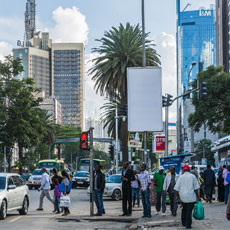
KICC, Nairobi - Kenya
Pic | Map
29 April - 01 May, 2013
10 AM TO 06 PM
Business Visitors Only
![]() |
![]() |